
Benefit of Junior Strength & Conditioning

Updated: Feb 7, 2023
Juniors can HUGELY benefit from doing speed, agility, and strength work outside of their sport: strength & conditioning training can set them for life! Playing sports is the best, but I've found that in Australia most junior sports are run by volunteers. If the juniors want to get a bit more serious later, there is a huge gap to fill with lack of core strength, speed, and muscle endurance. Starting S&C can stimulate development of essential motor skills and the nervous system, so young bodies will have the best setting for LIFE! Why?
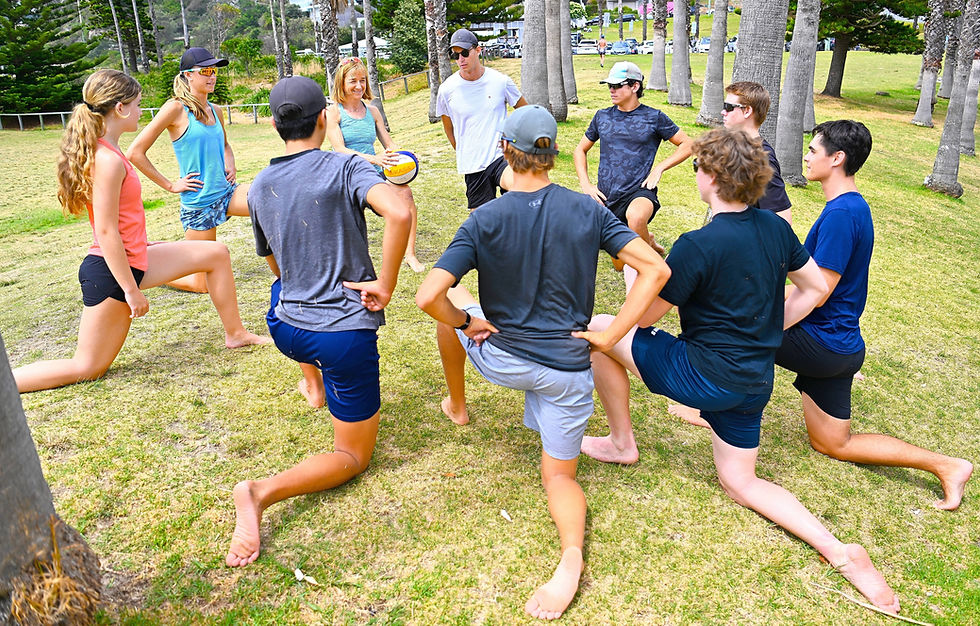
S&C training can be started from age 9-12, where the focus is to learn proper technique, developing strength using body-weight exercises. Later, we add some equipment and it can give a smooth transition to when they later want to start lifting weights. Lack of core strength can be a setback when they hit puberty and beyond, not being able to perform basic exercises and can plateau their progression, or worse can cause injury.
S&C has many branches, and all can be trained to varying degrees. Speed, agility, and reaction will increase naturally until puberty, then it needs to be trained for improvement, but unfortunately, during teenage years, participating in sports significantly reduces. This training can help them all! Having a good routine and training ethic can help cross those challenging years and keep them active and healthy.
S&C training can be fun! Juniors/youths love coming to a small, friendly group environment, and challenging themselves. I have been running these classes for over 10 years and have had great success keeping training fun and varied. I have received fantastic feedback from coaches after training players of soccer, netball, touch football, volleyball etc. commenting on noticing better performance on the field after attending only 6-8 sessions.
Habits make US.
During the ‘holiday’ weeks, we’ll try to change our approach to exercise and try to include it in our holiday weeks / life. Rather than thinking it is a chore, you try to make it part of your everyday life. You don’t have to think about it, just do it.
Habits and optimal brain functioning:
Make small changes in your life, which is easy to manage, and it can last long term.
Act how you want to be at the beginning. Then go through the process by changing little things, then repeat them, repeat, repeat until it becomes a habit and then your identity will change with it. (e.g.: become an active, fit person!).
Imagine yourself what you want to be when you are 80 years old. Would you want to be able to lift, drive, lean forward etc. Whatever is your motive, put it in your mind (write it down as well) so the small 10-30 mins daily activities contribute to becoming that person who you want to be, what was your original goal. You can TRANSFORM YOURSELF.
Plus, we forget how important regular exercise is for our regular brain function. When you do 30 mins moderate exercise in the morning, it allows your brain neurochemicals to function at a basic, not even an optimal level! Daily physical activities are essential for a normal brain function. The higher the intensity is, the more ’stress’ (good stress) on your brain is better for its optimal function. Many studies showed a correlation of the lack of exercise and the increased depression in people in recent years.
Comments